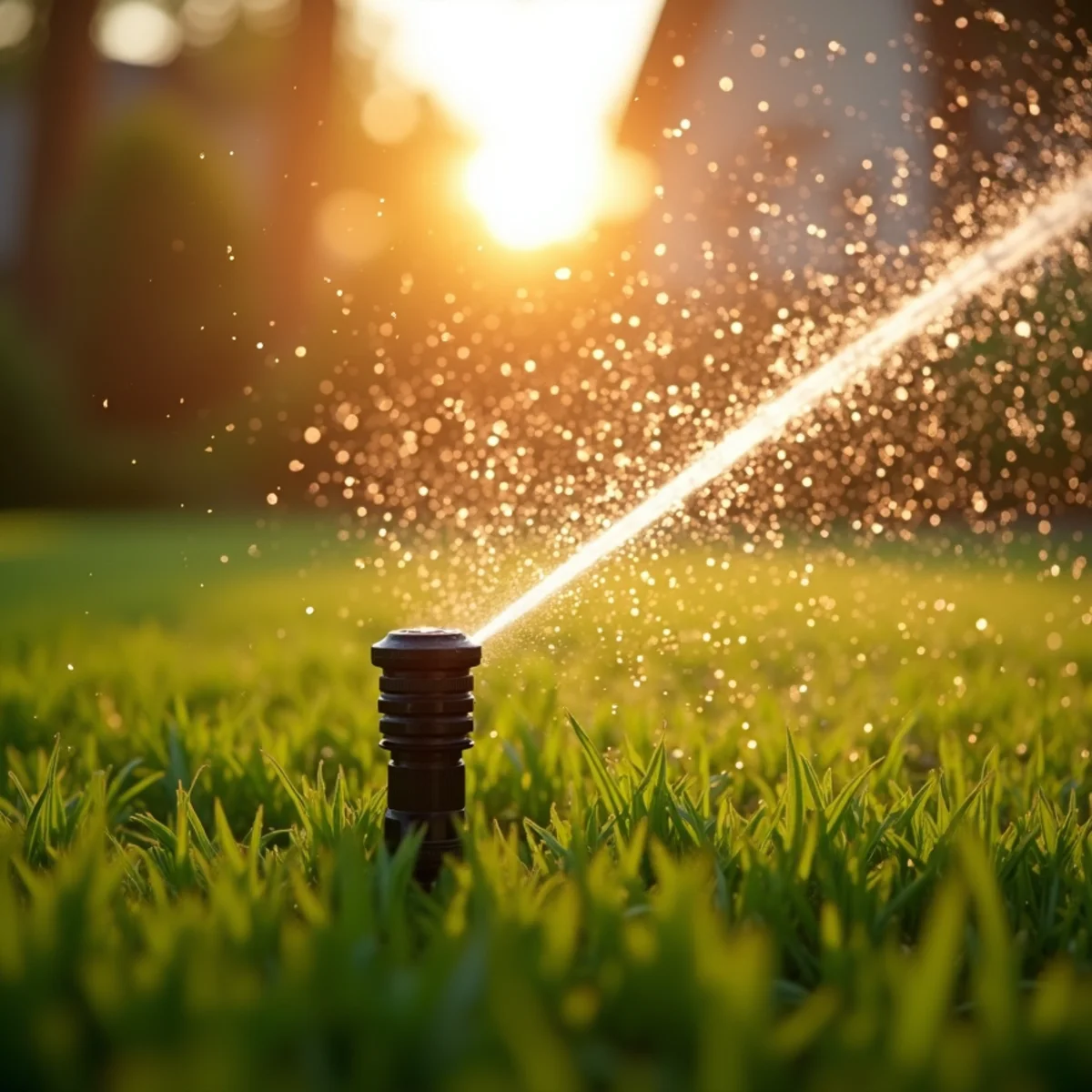
Surviving a Kansas Drought Summer: Wichita Lawn Watering Guide
By Grass Monkey Team·2026-05-01·8 min read
Direct Answer & Quick Takeaway
How to keep your Wichita lawn alive during extreme Kansas heat waves without skyrocketing your city water bills—mastering the cycle-and-soak method. In South-Central Kansas, successfully addressing drought lawn care kansas requires understanding Sedgwick County clay soils, local watering windows, and seasonal transition-zone growth cycles rather than generic lawn advice.
During July and August in Wichita, temperatures regularly soar into triple digits, accompanied by relentless 20–30 mph south winds that suck every drop of moisture from the topsoil. For homeowners trying to keep their lawns green, this often results in astronomical water bills and frustration when grass turns straw-brown anyway.
Watering a lawn effectively on Wichita clay is not about running your sprinklers longer; it is about matching water application rates to how fast heavy clay can actually absorb moisture.
The Problem: Clay Soil Runoff
Wichita clay soil has an infiltration rate of approximately 0.15 to 0.20 inches per hour. Most standard rotary sprinkler heads deliver water at a rate of 0.60 to 1.20 inches per hour. If you run a zone for 45 continuous minutes, your soil absorbs water for the first 10 minutes; the remaining 35 minutes simply sheets off your lawn into the street gutter.
The Solution: The "Cycle-and-Soak" Irrigation Method
To water deeply without wasting a single drop, reprogram your automatic sprinkler controller into multiple short cycles:
- Cycle 1: Run Zone 1 for 10 minutes at 4:00 AM to break soil surface tension.
- Soak Period: Let the water soak into the clay while your controller runs other zones for 45 minutes.
- Cycle 2: Run Zone 1 for another 10 minutes at 5:00 AM, driving moisture 4 to 6 inches deep to root zones.
- Cycle 3: (During 100°F+ heatwaves) Run a third 8-minute cycle at 6:00 AM.
This method delivers the same total volume of water but guarantees that 100% of it penetrates deep to root levels with zero street runoff.
City of Wichita Drought Water Conservation Stages
| Drought Warning Level | Trigger Condition | Residential Watering Rule | Irrigation Optimization Strategy |
|---|---|---|---|
| Normal Operations | Cheney Reservoir > 70% capacity | Voluntary conservation; odd/even days | Water 3 days/week; cycle-and-soak before 7 AM |
| Stage 1 Drought | Cheney Reservoir drops to 60% | Mandatory odd/even address schedule | Odd addresses water Mon/Wed/Fri; Even on Tue/Thu/Sat |
| Stage 2 Drought | Cheney Reservoir drops to 50% | 1 day per week limit; NO midday watering | Water exclusively during early morning; raise mower height to 4" |
| Stage 3 Emergency | Cheney Reservoir drops to 40% | Total outdoor sprinkler ban | Allow turf to enter summer dormancy; zero fertilizers |
Water at the Right Time of Day
Always schedule your irrigation to finish just before dawn (between 3:00 AM and 7:00 AM). Watering during the heat of midday loses up to 40% of water volume to wind drift and evaporation. Conversely, watering in late evening leaves grass blades wet overnight, creating the ideal warm, humid microclimate for fungal diseases like Brown Patch.
Field Perspective from Owner Keynan
Practical Sedgwick County Turf Guidelines
In our 10 years caring for residential lawns across Wichita, Maize, Goddard, and Derby, the single biggest differentiator between a struggling yard and an emerald turf is adherence to regional Kansas timing:
Mowing Height Protocol:Raise deck to 3.5–4 inches on Fescue during 90°F+ Kansas heatwaves to insulate root crowns and prevent moisture loss.
Water-Smart Schedule:Align irrigation with City of Wichita odd/even address schedules and observe the 10 AM–6 PM daily sprinkler ban.
Aeration & Clay Relief:Mechanical hollow-tine aeration in September is non-negotiable for relieving dense Wichita gumbo clay compaction.
Pesticide Certification:Ensure any chemical weed or grub treatments are applied by Kansas Dept. of Agriculture Category 3A/3B certified technicians.
Wichita sits in the USDA Transition Zone with summer temperatures frequently exceeding 100°F and heavy alkaline clay soils. This requires customized timing, cycle-and-soak watering, and blade height management to maintain healthy turf.
GM
Published by Grass Monkey Lawn Care
Locally owned and operated by Keynan at 21st and Tyler in Wichita, KS since 2015. Certified by the Kansas Department of Agriculture (Cat 3A/3B) and carrying $2,000,000 commercial liability coverage.
Reliable Wichita Service Guaranteed
Need Help with Your Lawn in Sedgwick County?
Don't spend your weekend wrestling with lawn problems. Call Grass Monkey at 1-323-606-0255 or request a fast written estimate online.