
C - Problem Solving Guide

Mulch or Rock? Choosing Flowerbed Ground Cover in Wichita

By Grass Monkey Team·2026-04-15·7 min read
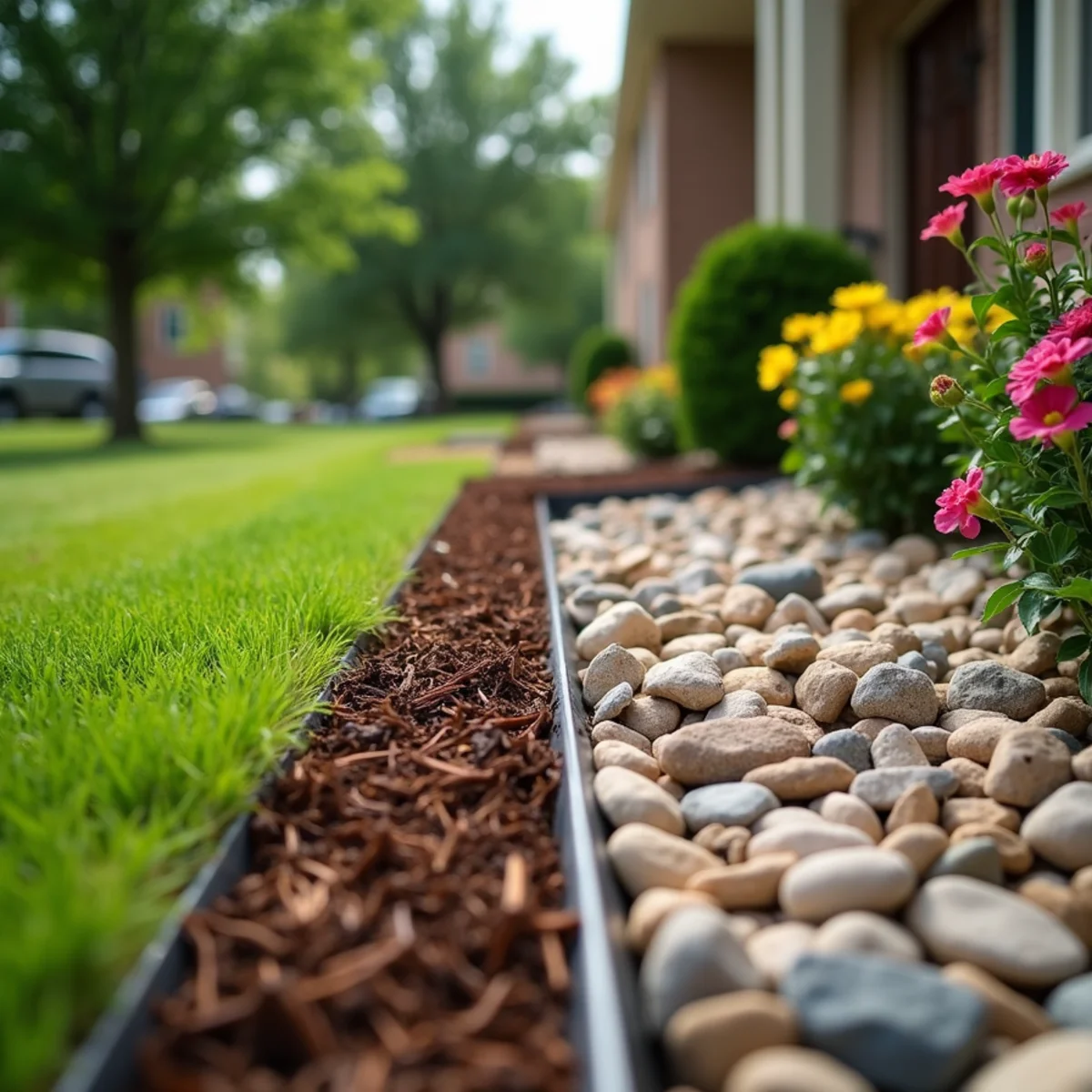
Side-by-side comparison of dark hardwood mulch and decorative river rock in Wichita flowerbed
Direct Answer & Quick Takeaway

Should you install hardwood mulch or river rock in your Kansas landscape beds? Analyze cost, plant health, maintenance, and wind resistance. In South-Central Kansas, successfully addressing mulch vs rock flowerbed requires understanding Sedgwick County clay soils, local watering windows, and seasonal transition-zone growth cycles rather than generic lawn advice.

When renovating front flowerbeds or foundation landscaping in Wichita, homeowners almost always debate whether to install shredded organic mulch or decorative stone rock. Both materials provide distinct advantages, and the optimal choice often depends on your sun exposure, plant species, and willingness to perform annual maintenance.

The Case for Double-Shredded Hardwood Mulch 1. Soil Moisture Retention: In Wichita's hot, breezy summers, exposed topsoil loses moisture rapidly. Mulch acts as an insulating blanket, reducing soil evaporation by up to 50% and protecting shallow feeder roots from extreme heat. 2. Soil Health Enhancement: As hardwood mulch naturally decomposes over 12 to 24 months, it deposits rich organic humus into native Wichita clay, improving drainage and soil fertility. 3. Plant Health: Mulch keeps the root zone up to 10°F cooler during 100°F Kansas heat waves, which is vital for delicate hydrangeas, azaleas, and flowering perennials. 4. Drawback: Organic mulch fades under intense ultraviolet sunlight and must be refreshed with a 1- to 2-inch top-dress layer every spring.

The Case for Decorative Kansas River Rock 1. Zero Annual Replacement: Rock is permanent. Once properly installed over heavy commercial weed fabric, it lasts for decades without decomposing or blowing away in 50 mph Kansas wind gusts. 2. Erosion & Drainage Control: Stone is unmatched along roof drip lines, gutter downspouts, and steep swales where torrential spring downpours would wash lightweight mulch into your lawn. 3. Pest & Fire Resistance: Termites, ants, and wood roaches do not nest in river rock, making stone an ideal choice for the immediate foundation perimeter against house siding. 4. Drawback: Rock absorbs solar radiation all day, radiating extreme heat into the surrounding soil, which can scorch sensitive shade plants.

5-Year Total Cost of Ownership: Mulch vs. River Rock | Factor / Timeline | Double-Shredded Hardwood Mulch (1,000 sq ft) | Decorative River Rock / Cobble (1,000 sq ft) | |---|---|---| | Year 1 Initial Installation | $650 – $950 (Labor + delivery + 3" layer) | $1,800 – $2,800 (Excavation, fabric, 3" stone) | | Years 2–5 Annual Top-Dress | $350 – $550 per year (Labor + 1.5" fresh mulch) | $0 (Zero annual replacement) | | Cumulative 5-Year Spend | $2,050 – $3,150 | $1,800 – $2,800 | | Weed Defense Longevity | Moderate (Weeds root in decayed mulch by Yr 3) | Excellent (When 5oz non-woven geotextile is used) | | Wind Resistance | Fair (Light mulch shifts in 60 mph gusts) | Superior (Heavy stone remains unmoved) | | Impact on Foundation Soil | Regulates moisture; buffers clay shrinking | Keeps foundation dry; prevents termite nesting |

The Hybrid Solution Many landscape designers recommend a hybrid approach: use permanent decorative river rock in high-wind corners, downspout splash zones, and foundation borders, while reserving moisture-rich dark mulch for central flower and shrub beds.

Field Perspective from Owner Keynan

Practical Sedgwick County Turf Guidelines

In our 10 years caring for residential lawns across Wichita, Maize, Goddard, and Derby, the single biggest differentiator between a struggling yard and an emerald turf is adherence to regional Kansas timing:

Mowing Height Protocol:Raise deck to 3.5–4 inches on Fescue during 90°F+ Kansas heatwaves to insulate root crowns and prevent moisture loss.
Water-Smart Schedule:Align irrigation with City of Wichita odd/even address schedules and observe the 10 AM–6 PM daily sprinkler ban.
Aeration & Clay Relief:Mechanical hollow-tine aeration in September is non-negotiable for relieving dense Wichita gumbo clay compaction.
Pesticide Certification:Ensure any chemical weed or grub treatments are applied by Kansas Dept. of Agriculture Category 3A/3B certified technicians.
Clear & Honest Answers

Common Questions Answered in This Guide

Quick takeaways regarding this lawn care topic.

Wichita sits in the USDA Transition Zone with summer temperatures frequently exceeding 100°F and heavy alkaline clay soils. This requires customized timing, cycle-and-soak watering, and blade height management to maintain healthy turf.
GM
Published by Grass Monkey Lawn Care
Locally owned and operated by Keynan at 21st and Tyler in Wichita, KS since 2015. Certified by the Kansas Department of Agriculture (Cat 3A/3B) and carrying $2,000,000 commercial liability coverage.
Reliable Wichita Service Guaranteed

Need Help with Your Lawn in Sedgwick County?

Don't spend your weekend wrestling with lawn problems. Call Grass Monkey at 1-323-606-0255 or request a fast written estimate online.

Serving Wichita Since 2015
Licensed & Fully Insured
2-Hour Call/Text Response
No Hidden Contract Fees
Call 323-606-0255Get Free Quote