Kansas Wind Storm Cleanup: What to Clear From Your Yard Fast
By Grass Monkey Team·2026-07-01·6 min read
Direct Answer & Quick Takeaway
Why leaving fallen limbs, bark, and storm debris on your lawn suffocates fescue within days—and how to clear your property safely after high winds. In South-Central Kansas, successfully addressing storm yard cleanup kansas requires understanding Sedgwick County clay soils, local watering windows, and seasonal transition-zone growth cycles rather than generic lawn advice.
Sedgwick County sits in the heart of "Tornado Alley," and even standard summer thunderstorms regularly generate straight-line wind gusts between 60 and 80 mph. Older mature trees—like Siberian elms, silver maples, and Bradford pears—frequently drop heavy branches across lawns and driveways.
While it is tempting to leave fallen limbs until the weekend, delaying storm cleanup causes rapid collateral damage to your turf and equipment.
The 72-Hour Rule: Preventing Grass Suffocation
In warm summer temperatures, cool-season Tall Fescue grass requires continuous air exchange and sunlight. When a dense branch, sheet of bark, or thick pile of storm-blown leaves rests on your turf, it traps humidity and blocks solar radiation. Within 48 to 72 hours, the grass underneath turns pale yellow; by day 5, fungal disease sets in and root crowns die, leaving unsightly bare mud spots that require autumn overseeding.
Common Kansas Tree Species Storm Risk Index
| Tree Variety | Branch Failure Risk in 60+ MPH Winds | Debris Type Dropped | Turf Impact If Not Cleared Fast |
|---|---|---|---|
| Bradford Pear (Pyrus calleryana) | Extreme (Weak narrow branch crotches) | Heavy structural boughs (4"–12" dia.) | Immediate turf flattening, gouged soil holes |
| Siberian Elm (Ulmus pumila) | Very High (Brittle, fast-growing wood) | Splintered limbs, twig blankets | Mower blade chipping, rapid grass yellowing |
| Silver Maple (Acer saccharinum) | High (Soft wood prone to decay) | Large rotting limbs, dense leaf mulch | Fungal mold development, sun starvation |
| Green Ash (Fraxinus pennsylvanica) | Moderate to High (Borer weakening) | Dead brittle upper canopy sticks | Hidden punctures, turf suffocation |
| Bur Oak (Quercus macrocarpa) | Low (Strong Kansas native hardwood) | Minor twig sheds, heavy acorns | Shading; acorns prevent smooth reel/rotary cut |
Protecting Your Lawnmower & Property
Scattered twigs, broken branches, and storm gravel destroy residential mower blades. Running a mower over hidden debris bends crankshafts, chips cutting blades, and can launch dangerous wooden shrapnel into windows or vehicles.
City of Wichita Yard Debris vs. Professional Haul-Away
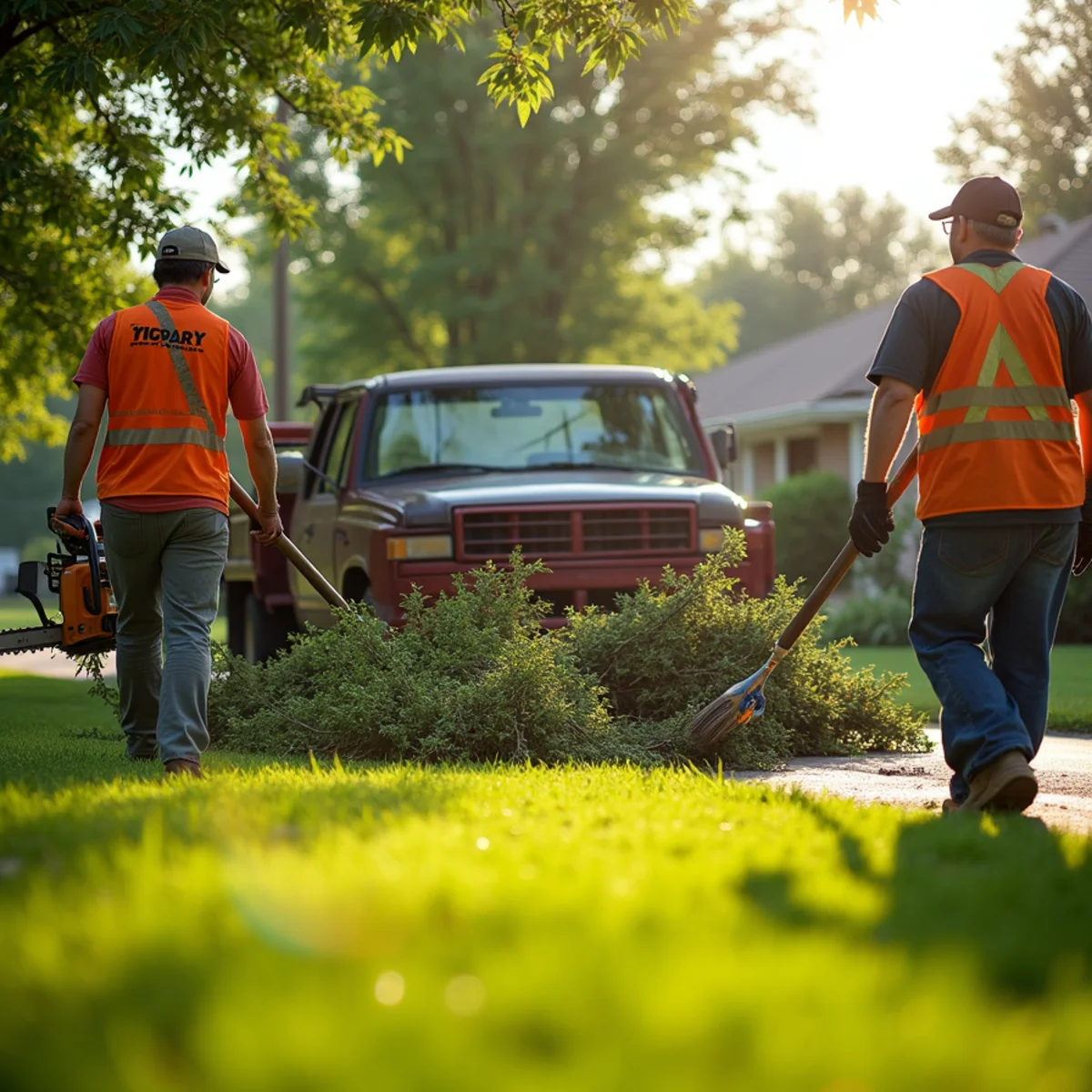
The City of Wichita does not provide regular curbside large-limb pickup outside of declared catastrophic emergencies. Homeowners must bundle limbs under 4 feet or haul them to transfer stations like the Sedgwick County Brooks Landfill. Grass Monkey Lawn Care eliminates this hassle: our storm response crew brings commercial chainsaws, heavy turf rakes, and high-capacity dump trailers to clear your yard completely within 24 to 48 hours.
Field Perspective from Owner Keynan
Practical Sedgwick County Turf Guidelines
In our 10 years caring for residential lawns across Wichita, Maize, Goddard, and Derby, the single biggest differentiator between a struggling yard and an emerald turf is adherence to regional Kansas timing:
Mowing Height Protocol:Raise deck to 3.5–4 inches on Fescue during 90°F+ Kansas heatwaves to insulate root crowns and prevent moisture loss.
Water-Smart Schedule:Align irrigation with City of Wichita odd/even address schedules and observe the 10 AM–6 PM daily sprinkler ban.
Aeration & Clay Relief:Mechanical hollow-tine aeration in September is non-negotiable for relieving dense Wichita gumbo clay compaction.
Pesticide Certification:Ensure any chemical weed or grub treatments are applied by Kansas Dept. of Agriculture Category 3A/3B certified technicians.
Wichita sits in the USDA Transition Zone with summer temperatures frequently exceeding 100°F and heavy alkaline clay soils. This requires customized timing, cycle-and-soak watering, and blade height management to maintain healthy turf.
GM
Published by Grass Monkey Lawn Care
Locally owned and operated by Keynan at 21st and Tyler in Wichita, KS since 2015. Certified by the Kansas Department of Agriculture (Cat 3A/3B) and carrying $2,000,000 commercial liability coverage.
Reliable Wichita Service Guaranteed
Need Help with Your Lawn in Sedgwick County?
Don't spend your weekend wrestling with lawn problems. Call Grass Monkey at 1-323-606-0255 or request a fast written estimate online.