
If you take a hand trowel or screwdriver and try to push it into your Wichita lawn in mid-July, chances are it won't penetrate more than an inch before hitting what feels like solid concrete. Welcome to native Kansas clay soil—colloquially known as "gumbo."
While clay soil is chemically rich in plant nutrients, its tiny microscopic particles pack tightly together under the weight of lawn mowers, pets, and children's foot traffic. Over time, all pore space is eliminated. Grass roots suffocate from lack of oxygen, and irrigation water simply sheets off into the gutter.
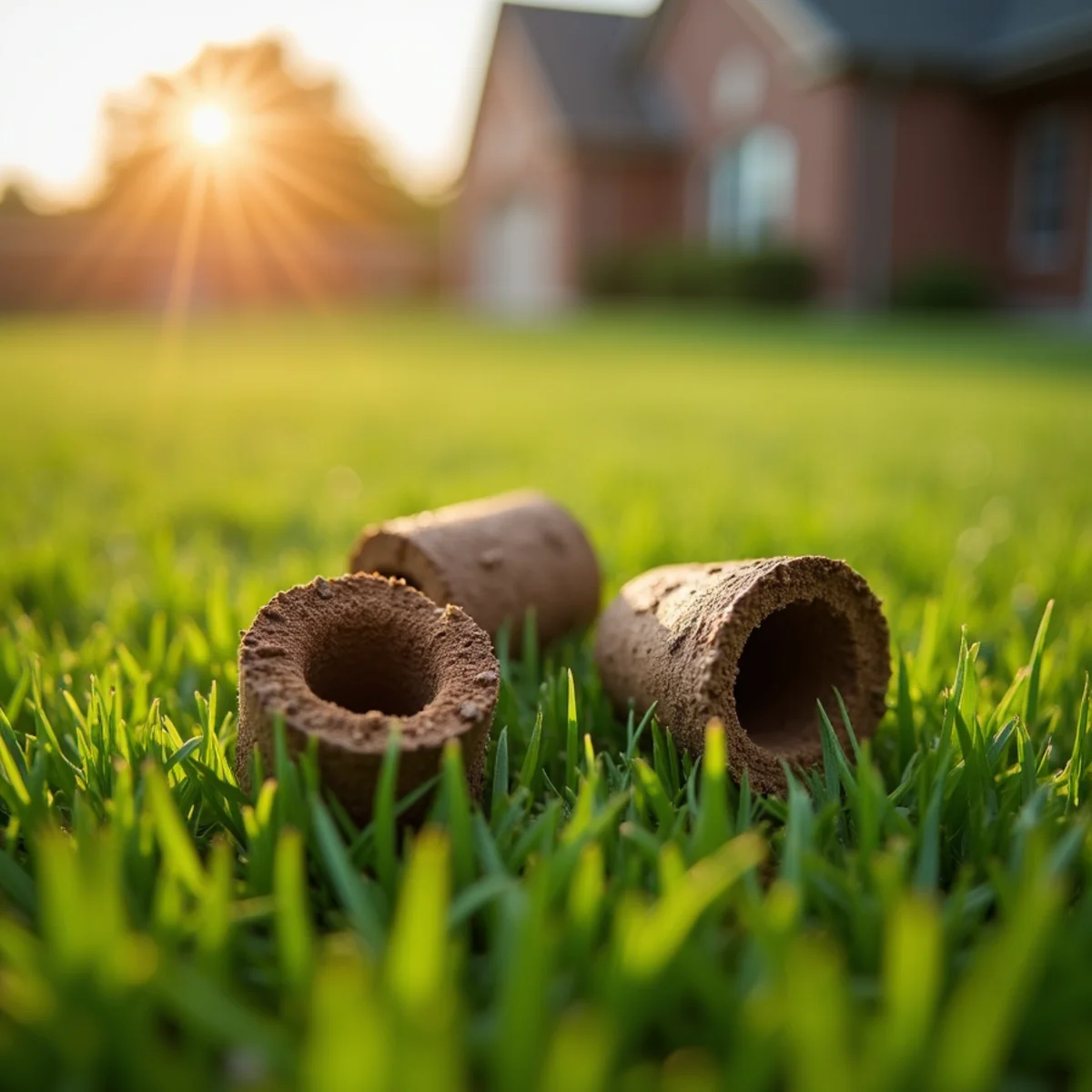
How Mechanical Core Aeration Works Core aeration is the mechanical process of driving hollow metal tines into the soil, extracting thousands of cylindrical plugs (cores) measuring 2.5 to 3.5 inches in depth and 0.5 to 0.75 inches in diameter.
Unlike "spike aerators" (which actually compress soil sideways, worsening compaction), hollow-core tines physically remove soil volume, relieving compaction instantaneously: - Oxygen Exchange: Roots receive immediate air exchange, stimulating cellular respiration and deep growth. - Water Infiltration: Irrigation penetrates deep into subsoil layers instead of pooling on top. - Thatch Breakdown: Microorganisms pulled up in the soil plugs naturally consume the dead, spongy thatch layer. ### Aeration Method Comparison for Kansas Clay | Aeration Technique | Soil Penetration Depth | Soil Volume Removed | Sedgwick County Clay Effectiveness | |---|---|---|---| | Hollow-Tine Mechanical Core | 2.5" to 3.5" deep | Thousands of physical plugs | Gold Standard — instantly breaks gumbo compaction | | Solid Spike Aeration | 1.0" to 2.0" deep | 0% (Pushes dirt sideways) | Counterproductive — compacts hole sidewalls further | | Liquid Chemical Aeration | 0.5" surface penetration | 0% (Soap/humate surfactant) | Supplemental only; cannot replace mechanical coring | | Tow-Behind Yard Roller | 0" | 0% | Avoid completely; compresses aerated root space |
Why Fall Is the Prime Aeration Window in Wichita While warm-season grasses (Bermuda, Zoysia) benefit from late spring aeration, Wichita's dominant cool-season Tall Fescue lawns should always be aerated between September 1 and October 15.
Aerating in autumn allows you to overseed at the exact moment soil temperatures are warm and weed competition has ended for the year. The grass seeds fall into the open aeration holes, ensuring direct seed-to-soil contact, high germination rates, and deep root development throughout the winter months.